The Short Answer
For many healthy dogs, a bath every few weeks is a reasonable starting point — but there’s no universal schedule. Veterinary guidance ranges from “occasional” for some breeds to every four to six weeks for others, and the right rhythm for your dog depends on factors no calendar can see.
What we do know: both extremes cause trouble. Bathing too rarely lets dirt, oil, and loose fur build up. Bathing too often can leave some dogs with dry, uncomfortable skin. The goal is the middle ground — and it’s easier to find by watching your dog than by watching the date.
What Actually Decides Bath Frequency
Four things matter more than the calendar:
- Coat type. Thick double coats generally need different care than short or single coats — and brushing does more of the daily work than bathing does.
- Lifestyle. A dog who hikes muddy trails on weekends needs more baths than a dog whose biggest adventure is the living room.
- Skin sensitivity. Some dogs simply have drier or more reactive skin, and they may do better with longer gaps and gentler products.
- Season. Summer swimming and winter road salt both change the equation — a quick rinse handles the obvious grime without a full shampoo session.
Signs the Rhythm Is Off
Whether baths are too frequent or not frequent enough, your dog’s skin usually says so first:
- Flakes or fine dandruff along the back
- Scratching that isn’t linked to fleas
- A coat that looks dull or feels rough
- A doggy smell that returns quickly after a bath
Any of these is worth a small schedule adjustment — and if they persist, they’re worth a vet visit. Skin that stays irritated can have causes no bath routine will fix.
A Bath Routine That’s Easier on Skin
How you bathe matters as much as how often:
- Brush first. Loose fur and tangles get in the way of a good wash. A two-minute brush-out makes the bath easier on everyone.
- Use lukewarm water. Comfortable temperature keeps the experience calmer — for the dog and for you.
- Use a shampoo made for dogs. Dog skin has a different pH than human skin, so human shampoo isn’t a suitable stand-in.
- Rinse thoroughly. Shampoo residue left behind can make dogs itchy after the bath.
- Dry the easy-to-miss spots. Paws, ears, skin folds, and the belly stay damp longest.
One Note on Choosing a Shampoo

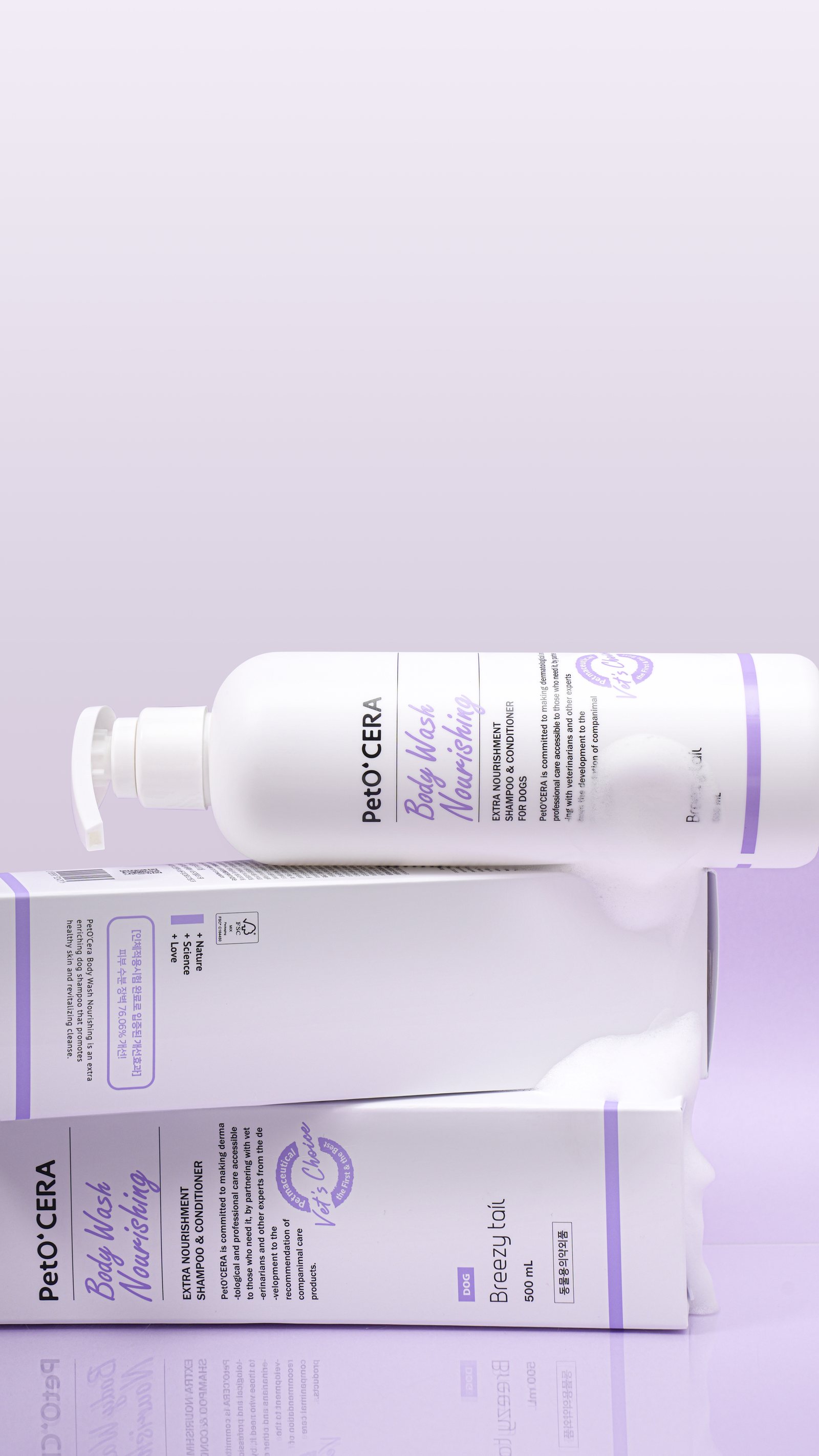
Look for a formula made specifically for dogs; if your dog’s coat tends toward dry or tangled, a two-in-one shampoo-and-conditioner can make post-bath brushing easier. Our own PetO’CERA Body Wash Nourishing is one such dog-specific option. Whatever you choose, patch-test a small area first — and for an existing skin condition, let your vet pick the product.
The Bottom Line
Bathe when your dog actually needs it — muddy paws, mystery smells, a coat that’s lost its softness. In between, brushing does the quiet maintenance. Clean should feel comfortable, too.
Building the rest of the routine? Our guide to your pet’s skin barrier covers the everyday habits between baths. For more routines and behind-the-scenes, follow @petocera on Instagram.
Leave a Reply